
Last updated on February 23rd, 2026 at 07:36 pm
A Pepper-Forward Stir Fry with Controlled Heat and Proper Texture
Black Pepper Chicken is one of those dishes that looks simple but exposes weak technique immediately. If the heat is too low, the chicken steams. If the sauce is added too early, it turns watery. If the pepper is old or pre-ground, the dish tastes flat instead of bold.
This version is structured to avoid those problems. The chicken is lightly coated for protection and texture. The vegetables are cooked briefly to preserve bite. The sauce is balanced for salt, sweetness, acidity, and pepper warmth. Most importantly, the cooking sequence is deliberate.
The goal is glossy coating, tender chicken, and crisp vegetables — not heavy sauce pooling at the bottom of the pan.
If you enjoy bold takeout-inspired flavors with a sweet citrus profile, 3-Ingredient Orange Chicken BBQ Style offers a sticky glaze-driven alternative. If you prefer oven-roasted structure instead of stir-fry technique, Parmesan Crusted Chicken Sheet Pan Dinner delivers texture contrast and crisp edges in a completely different format.

Why Black Pepper Is the Star Ingredient
In this recipe, black pepper is not background seasoning. It is the primary heat element. Freshly ground black pepper delivers aromatic warmth rather than sharp spice. That distinction matters. Pre-ground pepper tastes dull and dusty. Fresh cracking releases volatile oils that provide layered heat.
Unlike chili-based stir fries, this dish relies on pepper intensity supported by soy sauce depth and mild acidity from rice vinegar. The sugar level is intentionally low. The goal is savory heat, not sweetness.
The pepper should be noticeable but not overpowering. When balanced correctly, it builds slowly as you eat.
Understanding the Sauce Structure
The sauce combines light soy for salt, dark soy for color and depth, rice vinegar for brightness, and a small amount of brown sugar to round the edges. Toasted sesame oil adds subtle nuttiness without dominating.
Cornstarch is included directly in the sauce rather than used only for coating. This ensures controlled thickening once the liquid hits heat. However, the sauce must be stirred immediately before adding because cornstarch settles quickly.
The sauce should thicken in 20–30 seconds. If it thickens too long without the chicken inside, it becomes gluey. Timing matters.
The Role of Cornstarch on the Chicken
The light cornstarch coating does two things. First, it protects the chicken from drying out. Second, it creates a velvety texture once the sauce binds to it.
This is not deep frying. It is surface sealing. Too much cornstarch creates gumminess. Two tablespoons for 500 g of chicken is enough.
Allowing the coated chicken to rest briefly before cooking improves adhesion and prevents patchy coating.
Ingredients
Chicken
1.1 lbs (500 g) skinless chicken breast, cut into bite-sized cubes
2 tbsp peanut oil, divided
Salt, to taste
2 tbsp cornstarch
¼ tsp freshly ground black pepper
Vegetables and Aromatics
2 medium onions, cut into 1-inch cubes
1 large green bell pepper, cut into 1-inch cubes
½ tsp minced garlic
½ tsp minced ginger
1 fresh chili, chopped (optional)
Black Pepper Sauce
¾ tsp freshly ground black pepper
3 tbsp light soy sauce
1 tbsp dark soy sauce
1 tbsp rice vinegar
½ tsp brown sugar
1 tsp toasted sesame oil
1 tsp cornstarch
2 tbsp water or chicken broth

Step-by-Step Instructions
Step 1: Prepare the Sauce First
In a bowl, whisk together black pepper, light soy, dark soy, rice vinegar, brown sugar, sesame oil, cornstarch, and water. Whisk until completely smooth. No visible lumps should remain.
Set aside but remember to stir again before using.
Step 2: Coat the Chicken Properly
In a mixing bowl, toss chicken cubes with cornstarch, salt, and freshly ground black pepper. Ensure each piece is lightly and evenly coated.
Let the chicken rest 5–10 minutes while preparing vegetables. This short rest allows the coating to hydrate slightly, improving texture during cooking.
Step 3: Sear Without Steaming
Heat 1 tablespoon peanut oil in a wok or large skillet over medium-high heat. The pan should be hot before the chicken is added.
Add chicken in a single layer. Do not stir immediately. Allow one side to brown for about 2 minutes before flipping.
Cook until lightly golden and nearly cooked through. Remove from the pan and set aside.
If necessary, cook in batches. Overcrowding traps moisture and prevents browning.
Step 4: Stir-Fry Vegetables Quickly
Add the remaining oil.
Add garlic, ginger, and chili. Stir for 20–30 seconds until fragrant.
Add onion and bell pepper. Stir-fry over high heat for 2–3 minutes. Vegetables should remain slightly crisp. They will finish cooking once sauce is added.
Avoid lowering the heat. A fast stir fry preserves texture.
Step 5: Add Sauce and Control Thickness
Lower heat slightly.
Stir the sauce again and pour into the skillet. It should begin bubbling quickly.
Let it thicken for about 20–30 seconds until glossy.
Step 6: Return Chicken and Finish
Add chicken back into the pan. Toss rapidly to coat every piece evenly.
Cook for 1–2 additional minutes until chicken is fully cooked and sauce clings lightly.
Turn off heat immediately once coated.
Finish with an extra pinch of freshly cracked black pepper for aroma.
Expected Texture and Flavor
The chicken should be tender, not rubbery.
The vegetables should retain slight crunch.
The sauce should coat without pooling.
The pepper heat should build gradually rather than burn sharply.
If sauce appears too thick, add a tablespoon of water and toss quickly.
If too thin, allow another 20 seconds of simmering before returning chicken.
Heat Management at Home vs Restaurant Woks
Restaurant burners operate at significantly higher heat. At home, compensate by cooking in smaller batches and ensuring the pan is fully preheated before adding ingredients.
A heavy skillet retains heat better than thin nonstick pans. If using nonstick, expect slightly less browning and slightly milder flavor depth.
Variations Without Breaking the Structure
Chicken thighs can replace breast for juicier results.
Add celery for additional crunch.
Add sliced mushrooms, but cook them separately first to reduce moisture.
A splash of oyster sauce can deepen umami without increasing salt excessively.
Avoid adding too many vegetables at once, as excess moisture dilutes sauce thickness.
Serving Suggestions
Serve immediately over steamed jasmine rice.
Pair with plain white rice to balance pepper intensity.
Toss with lo mein noodles for a heavier version.
Serve alongside simple stir-fried greens for contrast.
This dish is best served fresh while sauce remains glossy.
Storage and Reheating
Store in an airtight container up to 3 days.
Reheat in a skillet over medium heat with a splash of water. Stir gently to prevent overcooking.
Microwave reheating works but may slightly firm the chicken. Cover loosely and heat in short intervals.
Avoid freezing if possible. The cornstarch texture may change after thawing.
Frequently Asked Questions
Can I use chicken thighs instead of chicken breast?
Yes. Thighs are more forgiving and remain juicier during high-heat stir frying.
Is this recipe very spicy?
No. The primary heat comes from black pepper. The fresh chili is optional and can be adjusted or omitted.
Why did my sauce turn watery?
Vegetables may have released excess moisture or heat was too low. Keep heat high and cook vegetables briefly.
Can I prepare the sauce ahead of time?
Yes, but whisk thoroughly before using since cornstarch settles quickly.
Why is my chicken rubbery?
It was either overcooked or crowded in the pan, causing steaming instead of browning.
What’s the difference between light and dark soy sauce?
Light soy provides saltiness. Dark soy adds deeper color and mild sweetness.
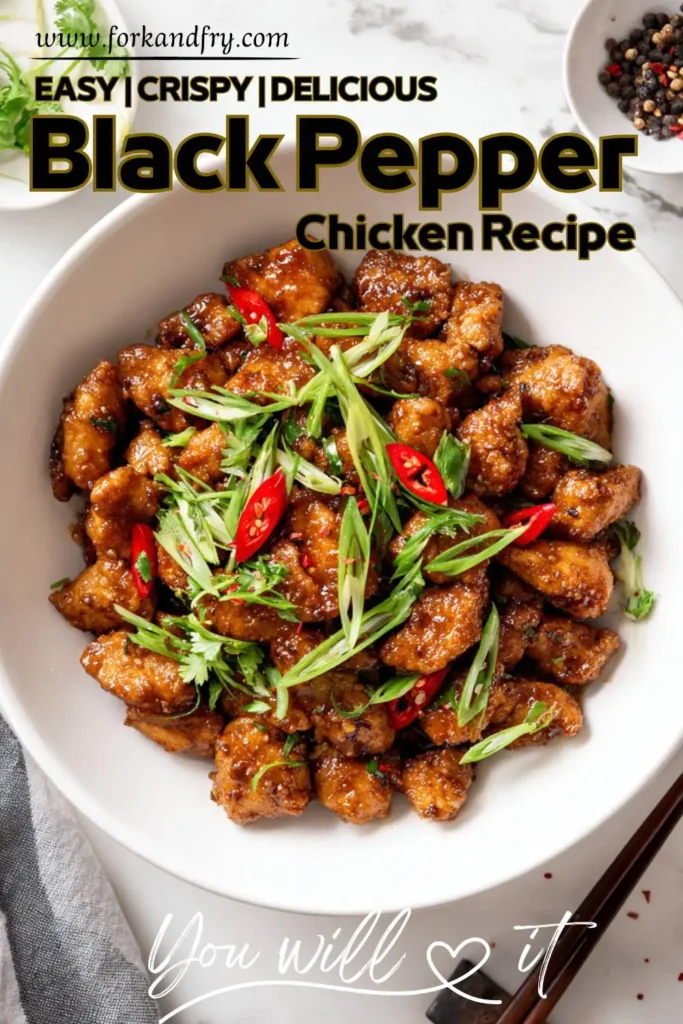

Easy Black Pepper Chicken Recipe

Equipment
- Wok or large skillet
- Small mixing bowl (for sauce)
- Medium mixing bowl (for chicken)
- Whisk or Fork
- Measuring spoons
- Cutting board
- Sharp knife
- Tongs or Spatula
Ingredients
For the Chicken
- 1.1 lb skinless chicken breast cut into bite-sized cubes
- 2 tbsp peanut oil divided (or any neutral oil)
- salt to taste
- 2 tbsp cornstarch for light coating
- 1/4 tsp freshly ground black pepper for the chicken coating
Veggies & Aromatics
- 2 medium onions cut into 1-inch cubes
- 1 large green bell pepper cut into 1-inch cubes
- 1/2 tsp garlic minced
- 1/2 tsp ginger minced
- 1 fresh chili green or red, chopped (optional)
Black Pepper Sauce
- 3/4 tsp freshly ground black pepper plus more to finish if desired
- 3 tbsp light soy sauce
- 1 tbsp dark soy sauce adds color and depth
- 1 tbsp rice vinegar balances sweetness and salt
- 1/2 tsp brown sugar just enough to round the edges
- 1 tsp toasted sesame oil
- 1 tsp cornstarch for thickening (in sauce)
- 2 tbsp water or chicken broth
Instructions
- Make the sauce: In a small bowl, whisk together 3/4 tsp black pepper, light soy sauce, dark soy sauce, rice vinegar, brown sugar, toasted sesame oil, 1 tsp cornstarch, and water/broth. Whisk until completely smooth with no cornstarch lumps. Set aside (stir again right before pouring—cornstarch settles quickly).
- Coat the chicken: Add chicken cubes to a bowl and season with a pinch of salt, 1/4 tsp freshly ground black pepper, and 2 tbsp cornstarch. Toss until every piece is lightly coated. Let rest 5–10 minutes while you cut onions and bell pepper.
- Sear the chicken (work in batches): Heat 1 tbsp peanut oil in a wok or large skillet over medium-high heat. Add chicken in a single layer. Let it cook undisturbed for about 2 minutes to brown, then flip and cook until lightly golden and nearly cooked through (another 2–3 minutes). Transfer to a plate. Repeat with remaining chicken if needed—avoid overcrowding so it browns instead of steaming.
- Stir-fry aromatics: Add the remaining 1 tbsp oil to the pan. Add minced garlic, minced ginger, and chopped chili (if using). Stir constantly for 20–30 seconds until fragrant (do not let garlic brown).
- Cook vegetables crisp-tender: Add onions and bell pepper. Stir-fry on high heat for 2–3 minutes until the edges soften slightly but the vegetables still have bite. This keeps the final dish crisp and prevents watery sauce.
- Thicken the sauce: Reduce heat slightly. Stir the sauce again, then pour it into the pan. Let it bubble for 20–30 seconds, stirring, until it turns glossy and begins to coat the vegetables.
- Return chicken and finish: Add the chicken back to the pan and toss quickly to coat. Cook 1–2 minutes until chicken is fully cooked through and sauce clings to every piece. Turn off heat and add an extra pinch of freshly cracked black pepper for aroma if desired.
- Serve: Serve immediately over steamed rice or noodles. Best enjoyed fresh while the vegetables are crisp and the sauce is glossy.
Notes
Enjoyed this recipe? Leave a review!
There are no reviews yet. Be the first one to write one.