
Created on February 23rd, 2026 at 03:28 pm
What This Recipe Is Designed to Deliver
Easy Skillet Chicken and Rice is a true one-pan dinner where the chicken and rice finish together without turning mushy, watery, or dry. The method is intentionally staged: you sear the chicken first for flavor, soften aromatics next, toast the rice for structure, then simmer under a tight lid so the rice steams evenly while the chicken finishes gently on top. The result is fluffy rice that tastes like the whole dish—not plain rice with chicken placed over it—and juicy chicken that stays tender because it is not overcooked during the rice simmer.
This recipe is also flexible. You can cook it with chicken thighs for extra forgiveness and richness, or with chicken breast for a leaner option. You can add vegetables without breaking the method, and you can scale it for meal prep without sacrificing texture if you follow the spacing and liquid rules.
If you like baked comfort flavors that lean cheesy and casserole-style, this chicken broccoli rice cheese recipe is a great alternative.
If you want a totally different weeknight chicken vibe that focuses on glossy caramelization instead of rice texture, these sticky honey garlic chicken thighs are worth bookmarking.

Why This One-Pan Method Works Better Than “Dump Everything In”
Most stovetop chicken-and-rice failures come from two problems: heat is too high, or the rice is never given a chance to cook in stable steam. Dump-and-cook versions often boil aggressively, which scorches the bottom while leaving the top layer undercooked. Or they are stirred too much, which releases starch and turns the rice pasty.
This method avoids both. Searing first builds fond (the browned bits on the skillet). That fond dissolves into the broth and seasons the rice naturally. Toasting the rice briefly strengthens the grains so they remain fluffy. Then, simmering on low with a tight lid creates consistent steam, which is what rice needs to finish evenly.
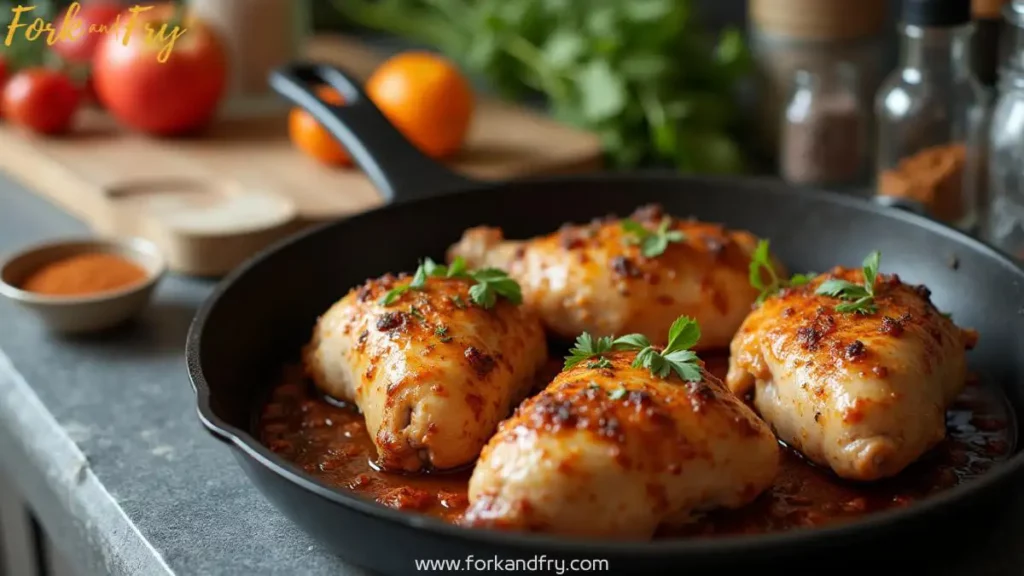
The “chicken-on-top” placement is not for aesthetics. It protects the chicken from direct high heat while the rice cooks underneath. The chicken finishes by gentle heat and steam, which keeps it juicy and prevents it from toughening.
Tools That Make This Easy Every Time
Use a wide, heavy skillet with a tight-fitting lid. A 10–12 inch skillet is ideal. Cast iron, enameled cast iron, or stainless steel all work well. Nonstick works, but you’ll get less browning (less fond), which means less flavor in the rice.
A tight lid matters more than people think. If steam escapes, the rice will cook unevenly. If your lid is loose, place a sheet of foil between skillet and lid to improve the seal.
A meat thermometer is the fastest way to keep chicken breast from drying out. Target 165°F at the thickest part for breast; thighs are best at 175–185°F if you want ultra-tender texture, though 165°F is still food-safe.
Choosing Rice That Won’t Turn Gluey
Long-grain white rice is the best fit here because it absorbs broth steadily and stays fluffy. Jasmine rice also works and adds a subtle aroma. Avoid short-grain rice for this method; it is naturally stickier and can clump. Avoid instant rice; it will overcook before the chicken finishes.
Rinsing is worth it. Rinse the rice under cool water until it runs mostly clear. That removes excess surface starch, which helps the final texture stay separated and clean instead of gummy.
Chicken Choices and How They Change Timing
Chicken thighs are the most forgiving option. They stay juicy if the rice needs an extra few minutes, and they bring a richer flavor to the skillet. Boneless thighs are easiest for weeknights. Chicken breast works well too, but it benefits from a little extra care: keep pieces a similar thickness, sear briefly, then let the gentle simmer finish the cooking.
If using large breasts, slice them horizontally into cutlets or pound them lightly for even thickness. This makes the finish more reliable and reduces the risk of dry edges.
Ingredients
Chicken
1½ lb boneless, skinless chicken thighs or chicken breasts
1 tsp kosher salt
½ tsp black pepper
1 tsp paprika (smoked or regular)
2 tbsp olive oil
Rice and Aromatics
1 small onion, finely diced
3 garlic cloves, minced
1 cup long-grain white rice, rinsed well and drained
2 cups low-sodium chicken broth (plus a splash extra for reheating)
½ tsp dried thyme
½ tsp dried oregano
Optional Add-Ins and Finish
½ cup frozen peas (or chopped spinach)
Fresh parsley, chopped
Lemon wedges (optional)

Step-by-Step Instructions
Step 1: Season the Chicken the Right Way
Pat the chicken dry with paper towels. Dry surfaces brown better, and browning equals flavor. Season both sides with salt, pepper, and paprika. Let it sit while you prep onion and garlic so the seasoning adheres evenly.
If you want deeper flavor, add ½ tsp onion powder to the chicken seasoning. Keep it simple and consistent—this dish relies on pan flavor, not a heavy sauce.
Step 2: Sear for Color, Not for Full Cooking
Heat the olive oil in a large skillet over medium-high heat. When the oil shimmers, add the chicken in a single layer. Do not crowd the pan; cook in two batches if needed. Let it sear undisturbed for 3–4 minutes so it develops color. Flip and sear the second side for about 2–3 minutes.
You are not cooking the chicken through yet. You are building flavor and giving the chicken a head start. Remove chicken to a plate. Keep any juices on the plate—you’ll add them back later.
Step 3: Build a Strong Base with Onion and Garlic
Reduce heat to medium. Add the diced onion to the same skillet. Stir and cook 3–4 minutes until softened and translucent. The onion should pick up some of the browned bits and turn slightly golden at the edges.
Add the garlic and stir for 30 seconds. Garlic burns fast, so keep it moving and don’t walk away.
Step 4: Toast the Rice for Better Texture
Add the rinsed, drained rice directly into the skillet. Stir constantly for 1–2 minutes. This light toasting step does two things: it coats the rice in the flavorful fat left behind, and it strengthens the grains so they stay fluffy instead of breaking down.
You should smell a faint nutty aroma. If rice starts browning aggressively, lower heat slightly.
Step 5: Add Broth and Seasonings, Then Scrape the Pan
Pour in the chicken broth. Add thyme and oregano. Stir gently while scraping the bottom of the pan with a wooden spoon. This lifts the fond into the broth and immediately upgrades the rice flavor.
Bring the liquid to a gentle simmer. You do not want a rolling boil.
Step 6: Return the Chicken on Top, Then Don’t Stir
Nestle the chicken pieces on top of the rice. Pour any juices from the plate back into the skillet. Do not stir after this point. Stirring pushes starch into the liquid and disrupts the steam pattern rice needs.
Cover with a tight-fitting lid. Reduce heat to low. Cook 18–20 minutes for long-grain white rice. Keep the lid closed. Every time you lift it, steam escapes and cooking becomes uneven.
Step 7: Rest Like You Mean It
Turn off heat and let the skillet rest, covered, for 5 minutes. This resting time is part of cooking. Steam redistributes and finishes the rice gently.
Remove the lid and fluff the rice around the chicken with a fork. If using frozen peas, stir them in now (or during the last 3 minutes of cooking if you prefer them very hot). The residual heat warms them quickly without turning them dull.
Step 8: Finish for Freshness
Sprinkle chopped parsley over the top. Taste the rice and adjust with a pinch of salt if needed. If you like brightness, squeeze lemon over the finished dish right before serving. The lemon doesn’t make it “lemony”—it just makes the flavors pop.
How to Know It’s Done Without Guessing
Your rice should be tender and fluffy with no wet pools of broth at the bottom. Chicken should be cooked through: 165°F for breast, and for thighs you can go higher (175–185°F) if you want a softer, more tender bite.
If the rice is slightly firm, add 2–3 tablespoons broth around the edges (not directly over the chicken), cover, and cook 3–5 more minutes on low, then rest 5 minutes again.
If the rice is done but there’s too much liquid, remove the lid and simmer on very low for 2–3 minutes to evaporate excess moisture, then fluff.
Variations That Still Respect the Method
Veggie Boost Without Making It Watery
Add diced bell pepper with the onion. Add sliced mushrooms after the onion softens (mushrooms release water, so give them a minute to cook off). Add spinach at the end during the rest step so it wilts without overcooking.
If you want broccoli, cut it small and add it during the last 5 minutes of cooking so it steams rather than turns mushy.
Make It Slightly Creamy Without Turning It Into Soup
Stir in ¼ cup grated Parmesan right after resting. It thickens lightly and adds savory depth without creating a heavy sauce. If you want true cheesy comfort, that’s where the baked option shines: https://www.forkandfry.com/chicken/chicken-broccoli-rice-cheese/
Spice and Heat Options
Add crushed red pepper flakes with the garlic for gentle heat. Add a pinch of cumin with the paprika for a warmer flavor. For a smoky finish, use smoked paprika and garnish with scallions.
Meal Prep and Storage
This dish is excellent for meal prep because the rice holds flavor and the chicken stays tender when reheated correctly. Store leftovers in airtight containers for up to 4 days.
For reheating, add a splash of broth or water before warming. Reheat in a skillet over medium-low with a lid, or microwave in short intervals, stirring the rice once midway to distribute heat.
Freezing works, but the rice may soften slightly after thawing. If freezing, cool completely first, portion tightly, and thaw overnight in the refrigerator before reheating gently.
Troubleshooting Guide
Rice is mushy
Heat was too low with too much liquid, or rice wasn’t rinsed. Next time rinse thoroughly and keep the simmer steady on low. Avoid stirring after the chicken returns.
Rice is undercooked but the chicken is done
Add a small splash of broth, cover, and give it 5 more minutes plus a rest. Use thighs next time if you want more forgiveness.
Bottom is scorched
Heat was too high or the skillet is thin. Keep it at the lowest simmer and use a heavier pan.
Chicken breast is dry
Pieces were too thick or seared too long. Slice into cutlets, sear less, and let steam finish the cooking.

FAQ
Can I use chicken thighs instead of chicken breast?
Yes. Thighs are the most forgiving choice and stay juicy, especially if the rice needs a few extra minutes.
Can I use brown rice?
Yes, but it needs more liquid and time (often 35–45 minutes). Use thighs, increase broth, and expect a longer covered cook plus rest.
Do I have to rinse the rice?
It’s strongly recommended. Rinsing removes excess starch and helps keep the rice fluffy instead of sticky.
Can I add vegetables directly into the skillet?
Yes. Add firm vegetables with the onion, and quick-cooking greens at the end during the rest step.
How do I keep the rice from burning on the bottom?
Use a heavy skillet, keep heat truly low after covering, and avoid lifting the lid repeatedly.
Is this actually one pan?
Yes. Everything cooks in a single skillet. The only optional extra is a bowl if you prefer mixing seasonings before adding them.

Easy Skillet Chicken and Rice (One Pan)

Equipment
- Large heavy skillet with lid (10–12 inch)
- Measuring Cups and Spoons
- Cutting board
- Sharp knife
- Wooden spoon or spatula
- Fork (for fluffing rice)
- Instant-read thermometer (recommended)
Ingredients
For the Chicken
- 1 1/2 lb boneless, skinless chicken thighs or chicken breasts cut into similar-size pieces if very large
- 1 tsp kosher salt
- 1/2 tsp black pepper
- 1 tsp paprika smoked or regular
- 2 tbsp olive oil divided if needed
For the Rice
- 1 small onion finely diced
- 3 cloves garlic minced
- 1 cup long-grain white rice rinsed well and drained
- 2 cups low-sodium chicken broth
- 1/2 tsp dried thyme
- 1/2 tsp dried oregano
Optional Add-Ins and Finish
- 1/2 cup frozen peas optional (stir in at the end)
- fresh parsley chopped, for garnish
- lemon wedges optional, for serving
Instructions
- Prep: Rinse rice until the water runs mostly clear and drain well. Dice onion and mince garlic. Pat chicken dry and season with salt, pepper, and paprika.
- Sear the chicken: Heat 2 tbsp olive oil in a large skillet over medium-high heat. Add chicken in a single layer and sear 3–4 minutes without moving. Flip and sear 2–3 minutes more. Transfer chicken to a plate (it will finish cooking later).
- Cook aromatics: Reduce heat to medium. Add onion to the skillet and cook 3–4 minutes until softened. Add garlic and cook 30 seconds until fragrant.
- Toast the rice: Add rinsed rice to the skillet and stir constantly for 1–2 minutes to lightly toast and coat the grains in the pan drippings.
- Add broth and seasonings: Pour in chicken broth. Stir while scraping up browned bits from the bottom of the pan. Add thyme and oregano and bring to a gentle simmer.
- Finish together: Nestle the seared chicken on top of the rice (do not stir). Pour any juices from the plate back into the skillet. Cover with a tight-fitting lid, reduce heat to low, and cook 18–20 minutes.
- Rest: Turn off heat and let rest, covered, for 5 minutes so the rice finishes steaming evenly.
- Fluff and serve: Remove lid and fluff rice with a fork around the chicken. Stir in peas (if using) to warm through. Garnish with parsley and serve with lemon wedges if desired.
Notes
Enjoyed this recipe? Leave a review!
There are no reviews yet. Be the first one to write one.