
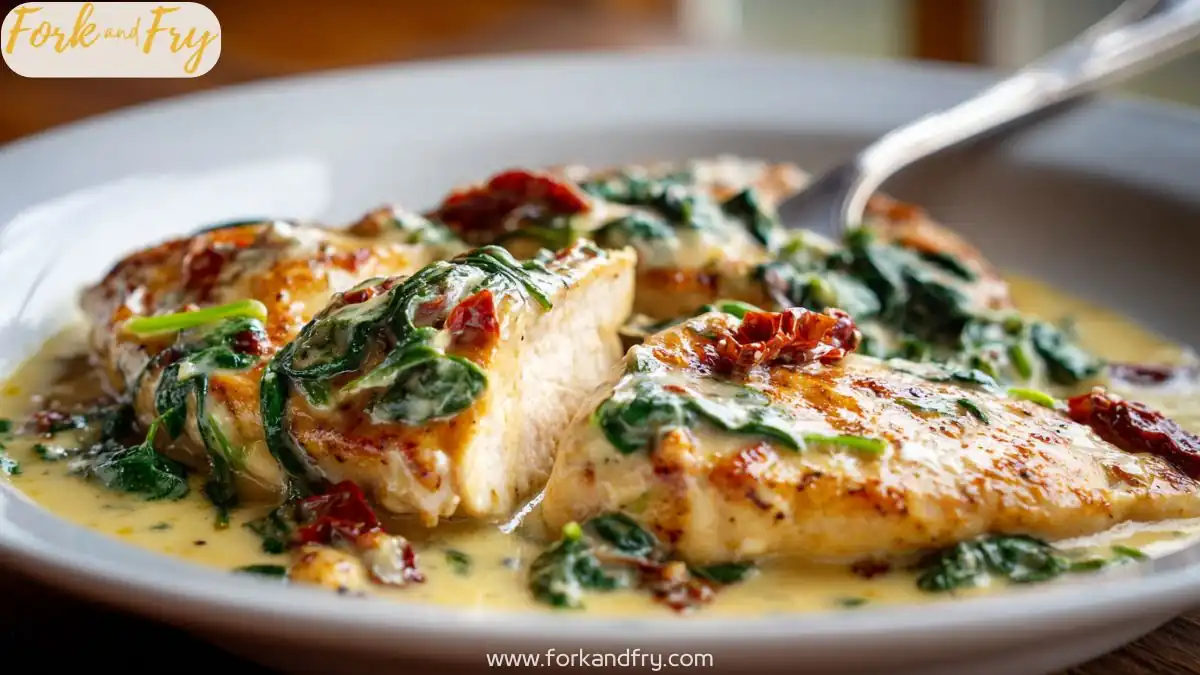
Creamy Tuscan Chicken with Spinach

Golden-seared chicken in a creamy Tuscan-style garlic Parmesan sauce with sun-dried tomatoes and fresh spinach. A fast, cozy skillet dinner that feels restaurant-worthy.
Equipment
- Large skillet (12-inch) with lid (optional)
- Tongs
- Instant-read thermometer (recommended)
- Measuring cups & spoons
- Microplane or grater (for Parmesan)
Ingredients
For the chicken
- 4 boneless, skinless chicken breasts or 6 thin cutlets; slice thick breasts in half lengthwise for even cooking
- 1 tsp kosher salt plus more to taste
- 1/2 tsp black pepper plus more to taste
- 1 tsp Italian seasoning
- 1/2 tsp paprika sweet paprika
- 2 tbsp olive oil for searing
For the creamy Tuscan sauce
- 3 cloves garlic minced
- 1/2 cup sun-dried tomatoes drained and chopped; oil-packed preferred
- 1 cup chicken broth low-sodium preferred
- 1 cup heavy cream
- 1/2 cup Parmesan cheese freshly grated (not pre-shredded)
- 2 cups baby spinach packed
- 1/2 tsp red pepper flakes optional
Instructions
- Prep the chicken for even cooking: If your chicken breasts are thick (more than about 1 inch), slice them horizontally to make thinner cutlets. This helps the chicken cook through quickly without drying out. Pat the chicken dry with paper towels so it browns instead of steaming.
- Season well: Sprinkle both sides of the chicken with salt, pepper, Italian seasoning, and paprika. Press the seasoning in so it sticks. Let the chicken sit at room temperature for 5 minutes while you heat the skillet (this helps with more even cooking).
- Heat the pan correctly: Place a large skillet over medium-high heat for 2 minutes. Add olive oil and swirl to coat. The oil should shimmer—if it smokes, reduce the heat slightly before adding the chicken.
- Sear the chicken (don’t move it too soon): Add the chicken in a single layer. Cook 4–5 minutes on the first side without moving it, so it forms a golden crust. Flip and cook another 3–4 minutes. The chicken does not need to be fully cooked yet; you’re building color and flavor. Transfer chicken to a plate.
- Lower heat and start the flavor base: Reduce heat to medium. Add minced garlic and stir for about 20–30 seconds until fragrant. Keep it moving so it doesn’t burn (burnt garlic can make the sauce bitter).
- Add sun-dried tomatoes: Stir in the chopped sun-dried tomatoes and cook for 60 seconds. This warms them through and releases their flavor into the pan.
- Deglaze the skillet: Pour in the chicken broth and immediately scrape the bottom of the pan with a wooden spoon to lift all the browned bits. Simmer 2–3 minutes to reduce slightly—this concentrates flavor and keeps the sauce from tasting watery.
- Add the cream gently: Reduce heat to medium-low and pour in the heavy cream. Stir slowly until the mixture looks uniform. Let it simmer (small bubbles, not a hard boil) for 3–5 minutes until it begins to thicken and lightly coats the back of a spoon.
- Stir in Parmesan the right way: Add Parmesan in small handfuls, stirring after each addition so it melts smoothly. Keep the heat at medium-low. If the sauce boils aggressively, the cheese can turn grainy—so aim for a gentle simmer.
- Season the sauce: Add red pepper flakes if using. Taste the sauce (careful, it’s hot) and adjust with a pinch more salt or pepper if needed. Remember the sauce will taste slightly stronger once the chicken returns to the pan.
- Add spinach at the end so it stays bright: Stir in the spinach and toss it in the warm sauce. It will look like a lot at first, then quickly wilt down in 2–3 minutes. Stir until just wilted and still vibrant green.
- Return chicken and finish cooking in the sauce: Add the chicken (and any juices on the plate) back into the skillet. Spoon sauce over the top. Simmer gently 5–7 minutes, or until the thickest piece reaches 165°F / 74°C. If you don’t have a thermometer, slice the thickest piece—juices should run clear and the center should not be pink.
- Final texture check: If the sauce is thicker than you want, stir in 1–3 tablespoons broth. If it’s thinner than you want, simmer uncovered for 2–4 minutes, stirring occasionally. Turn off heat and let the skillet sit 2 minutes—the sauce thickens slightly as it rests.
- Serve: Plate chicken and spoon plenty of creamy Tuscan sauce over the top. Finish with extra Parmesan and basil if you like. Best served over pasta, rice, mashed potatoes, or with crusty bread to soak up the sauce.
Notes
Cheese tip: Freshly grated Parmesan melts smoother than pre-shredded.
Heat tip: Keep the sauce at a gentle simmer—avoid a hard boil once the cream and cheese are in.
Leftovers: Reheat low and slow with a splash of broth or cream to loosen the sauce.